



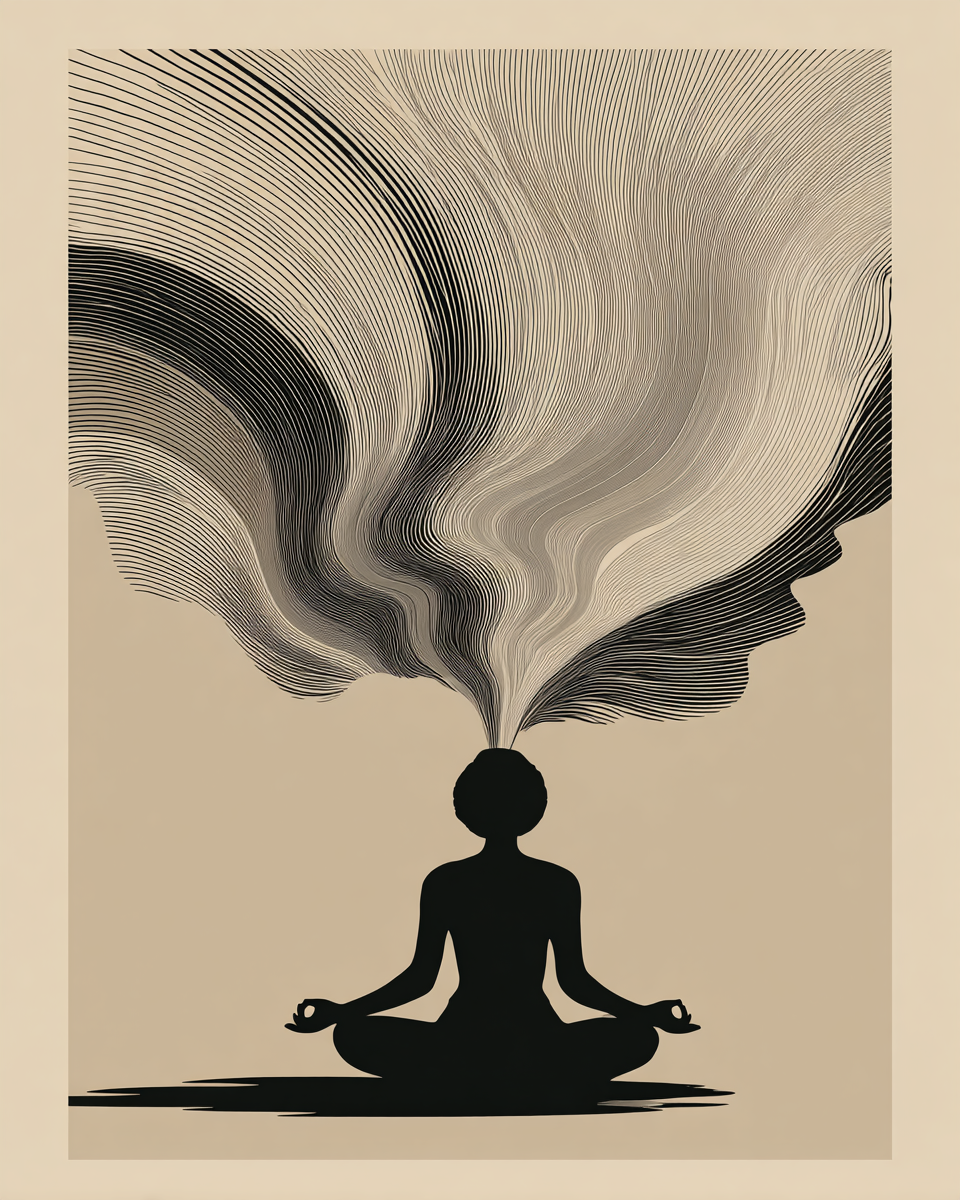
I used to think breathwork was something people did at expensive retreats while wearing linen pants and burning sage. Now that I’m older and dealing with real adult problems I kind of want to go to one of these.
I learned that you can get a little taste of these retreats wherever you are. Turns out, there's a biological off switch in your body that most people don't know how to use. It takes about 20 seconds and you can do it at your desk.
The Vagus Nerve: Your Built-In Chill Button
You have a nerve that runs from your brainstem down through your chest and into your abdomen. It's called the vagus nerve, and it's your body's direct line to your parasympathetic nervous system. That's the system responsible for calming you down.
Think of your nervous system like a car. Your sympathetic nervous system is the gas pedal (stress, alertness, fight-or-flight). Your parasympathetic nervous system is the brake (rest, digest, recover). Most knowledge workers spend their entire workday with their foot on the gas.
The vagus nerve is your brake pedal. And specific breathing patterns activate it.
Dr. Andrew Huberman, a neuroscientist at Stanford, has done extensive research on this. When you take slow, deliberate breaths with longer exhales than inhales, you send a signal through the vagus nerve that tells your body "we're safe now, you can relax."
This isn't meditation (even though I’m a big fan of that too). It's physiology.
Why Three Breaths?
You might be wondering why three. Why not five, or ten, or just one deep breath?
Three is the sweet spot. It's enough time to trigger a measurable shift in your nervous system without requiring so much time that you'll skip it when you're busy. Research shows that even 60-90 seconds of intentional breathing can lower cortisol levels and heart rate.
One breath feels rushed. Ten feels like a time commitment. Three is doable when you need it most.
How to Do It
Give it a try. It’s easy as pie:
Breath 1: Inhale slowly through your nose for a count of 4. Exhale slowly through your mouth for a count of 6. Feel your shoulders drop slightly on the exhale.
Breath 2: Same pattern. Inhale for 4, exhale for 6. Notice your jaw. Are you clenching? Let it soften.
Breath 3: One more time. Inhale for 4, exhale for 6. On this last exhale, imagine releasing whatever tension you're holding.
Total time: about 20 seconds.
The longer exhale is key. That's what activates your vagus nerve most effectively. You're literally hacking your nervous system with the rhythm of your breath.
When to Use It
The 3-breath reset works best at transition points. Times when you're shifting from one mental state to another.
Try it:
-
Right after closing your laptop for the day
-
Before walking into your house after work
-
After a stressful meeting or phone call
-
When you catch yourself spiraling about tomorrow's tasks
-
First thing in the morning before opening your email
These transition moments are when your nervous system needs a clear signal that you're changing gears. Without that signal, you carry the energy from one situation into the next.
The Compound Effect
Here's what nobody tells you about breathwork. The benefits compound.
The first time you do three intentional breaths, you'll probably feel a little calmer. Maybe. The tenth time, you'll notice a more significant shift. By the fiftieth time, your body starts to recognize the pattern and responds faster.
You're training your nervous system to know this is the signal for downshifting. Eventually, just starting the first breath triggers the relaxation response because your body knows what's coming.
It's like muscle memory, but for your stress response.
Your Turn
Next time you finish work, before you do anything else, try it. Three breaths. Inhale for 4, exhale for 6.
Pay attention to what changes. It might be subtle. That's fine. Subtle still counts and is usually the start of something bigger.


